
The Ultimate Guide to Interior Design Shops Los Angeles: Curating Spaces with Soul
You know that feeling when you walk into someone's home and immediately think "okay, who are you and how did you do this?"
Every object feels intentional. The lamp in the corner looks like it belongs in a gallery. There's a painting on the wall that you can't stop looking at — you're not even sure why. A ceramic object sits on the console and you have absolutely no idea what it is, but you want one immediately. The whole room has this quality that's really hard to articulate but impossible to miss.
That quality is soul. And it doesn't come from a furniture catalog.
It comes from knowing where to shop — and more importantly, how to shop. In Los Angeles, that means understanding a design world that runs much deeper than the big showrooms most people know about. The best interior design shops Los Angeles has to offer aren't selling rooms. They're selling complete creative visions — art, lighting, objects, décor, and yes, furniture — each piece chosen because it has something to say.
So let's talk about where to find them.
The Evolution of Interior Design Shops Los Angeles
Here's a quick history lesson — and it's actually interesting, promise.
For a long time, the interior design shops in Los Angeles were known for being built around a very specific idea of what "luxury" meant. Hushed rooms. Expensive upholstery. A lot of matching. The emphasis was almost entirely on furniture — the sofa, the dining table, the credenza — and everything else was an afterthought. Maybe a lamp from the same collection. Maybe a print that "went with" the cushions.
The result? Rooms that were technically expensive and deeply, profoundly beige. In every sense of the word.
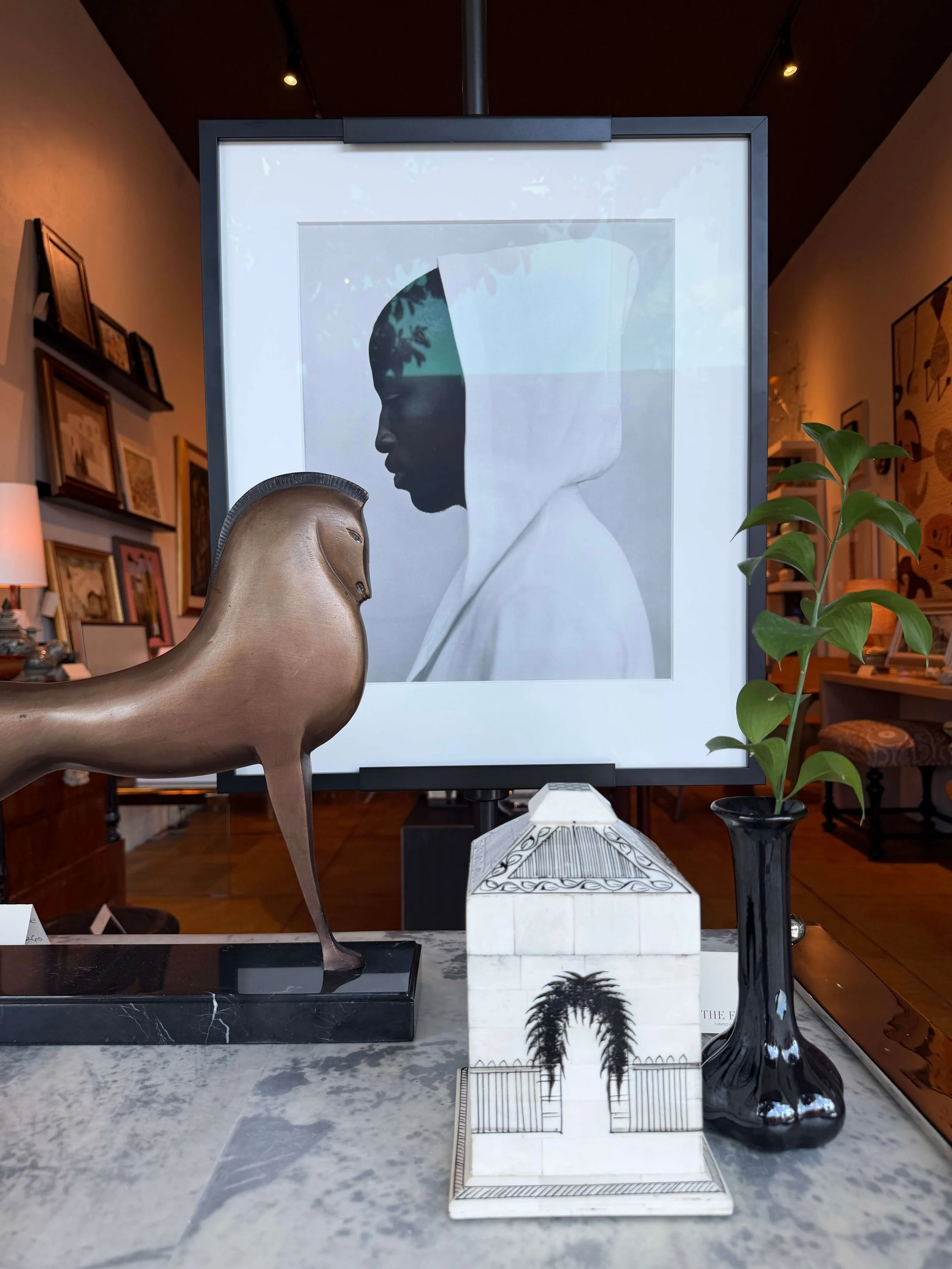
What nobody was really talking about — at least not in mainstream design retail — was everything else. The original oil painting that makes a room feel like it has a history. The vintage brass floor lamp that looks like it was made by someone with very strong opinions about light. The hand-thrown ceramic object on the shelf that catches the afternoon sun in a way that makes you stop mid-conversation.
These were the things that actually made rooms feel like something. And for a long time, you had to know the right people to find them.
Then the interior design shops Los Angeles started evolving. The designers, stylists, and art directors who were building the city's most interesting interiors started demanding spaces that reflected how they actually thought about design — holistically. A room isn't a furniture arrangement. It's a composition. And a composition needs all its elements: the art, the light, the objects, the surfaces, the furniture holding it all together.
The shops that understood this first became the ones everyone wanted to know about. And they clustered, almost inevitably, along Beverly Boulevard.
Where Do Interior Designers Shop in Los Angeles: The Beverly Blvd Secret
Ask any interior designer where they actually go — not where they send a client who wants something safe, but where they go when they need something real — and you'll hear Beverly Boulevard come up more than anywhere else.
This is where interior designers shop in Los Angeles when the brief calls for a painting that could anchor an entire room. When the client needs a lamp that's also a conversation piece. When the project needs that one object — you'll know it when you see it — that pulls everything else into focus.
Beverly Blvd has a specific energy. It's unhurried. It doesn't try to impress you. But walk slowly enough and keep your eyes open, and it will absolutely stop you in your tracks.
Right in the thick of it is THE EDIT Curated Interiors, at 7607 1/2 Beverly Blvd, Los Angeles, CA 90036. And if you're genuinely curious about where interior designers shop in Los Angeles, this is the address you write down.
What makes THE EDIT different from most interior design shops Los Angeles has to offer is the scope of the curation. This isn't a furniture showroom that also sells some accessories. It's a fully realized creative environment where original paintings hang beside sculptural lighting, art objects anchor shelves with intention, and every piece of furniture was chosen to be in dialogue with everything around it.
You walk in and something will get you. Maybe it's a large abstract canvas — all texture and movement — that you find yourself standing in front of for longer than you planned. Maybe it's a pair of vintage lamps with hand-blown glass shades that you immediately start mentally placing in your bedroom. Maybe it's a hand-cast bronze object on a plinth that you can't quite categorize but absolutely cannot stop looking at.
That experience — of being genuinely stopped by something — is exactly why this is where interior designers shop in Los Angeles. Because the pieces here aren't just good-looking. They're arresting.
The full collection lives at designcf.com, but the in-person experience is in a different category entirely. Some things need to be stood in front of.
Top Interior Design Trends for 2026: The Return to Collected Spaces
The defining mood of 2026 design is a collective exhale. After years of chasing the perfectly minimal, the relentlessly clean, the Instagram-optimized neutral palette — people are done. They want warmth. They want story. They want rooms that feel like they belong to an actual human being with actual taste and actual experiences.
Here's how that's playing out across the best interior design shops Los Angeles has right now.
Illuminated Sculpture: Lighting as Art
Recessed lighting had a long run. It's over.
The 2026 approach to lighting is essentially this: if the lamp doesn't earn its place visually when it's switched off, keep looking. We're talking about vintage floor lamps with architectural silhouettes that operate as standalone sculptures. Table lamps with bases in unlacquered brass or hand-thrown ceramic that you'd genuinely display as objects even if they didn't work. Wall sconces placed for atmosphere and mood rather than function.
The interior design shops Los Angeles that are worth visiting right now are stocked with lighting that treats illumination as almost secondary to presence. Because the right lamp doesn't just light a room — it defines how the room feels at 9pm with a glass of wine in your hand. That's a very different brief than "provides adequate lumens."
The "Collected" Aesthetic
This is the big one. The total, absolute, no-more-excuses end of the matching set.
The 2026 home looks like it was assembled by someone who has been living interestingly for several decades. An 18th-century oil painting beside a brutalist coffee table. A mid-century lamp illuminating a contemporary abstract canvas. A hand-carved wooden object from one continent on a shelf beside a glazed ceramic from another. The room tells a story — a specific, personal, irreproducible one.
The "Collected" Aesthetic is also why so many people are suddenly asking where interior designers shop in Los Angeles. Because you can't fake this look with a single shopping trip to a chain. It requires genuine curation across art, lighting, objects, and furniture — which is exactly what THE EDIT is built to provide.
Tactile Décor: The Invitation to Touch
In 2026, surfaces are doing serious work. Raw travertine. Unlacquered brass that will age and patina with time. Rough-hewn ceramics with uneven glazes and irregular edges. Wood that still looks like it came from a tree.
The idea is that objects should invite interaction — not just be looked at from across the room. A small ceramic art object on a console should make you want to pick it up. A bronze sculpture should feel as interesting in your hands as it looks on a shelf. The best interior design shops Los Angeles has right now are prioritizing pieces with this quality of tactile presence — things that engage more than just your eyes.
Beyond the Sofa: The Power of Original Paintings and Sculptural Objects
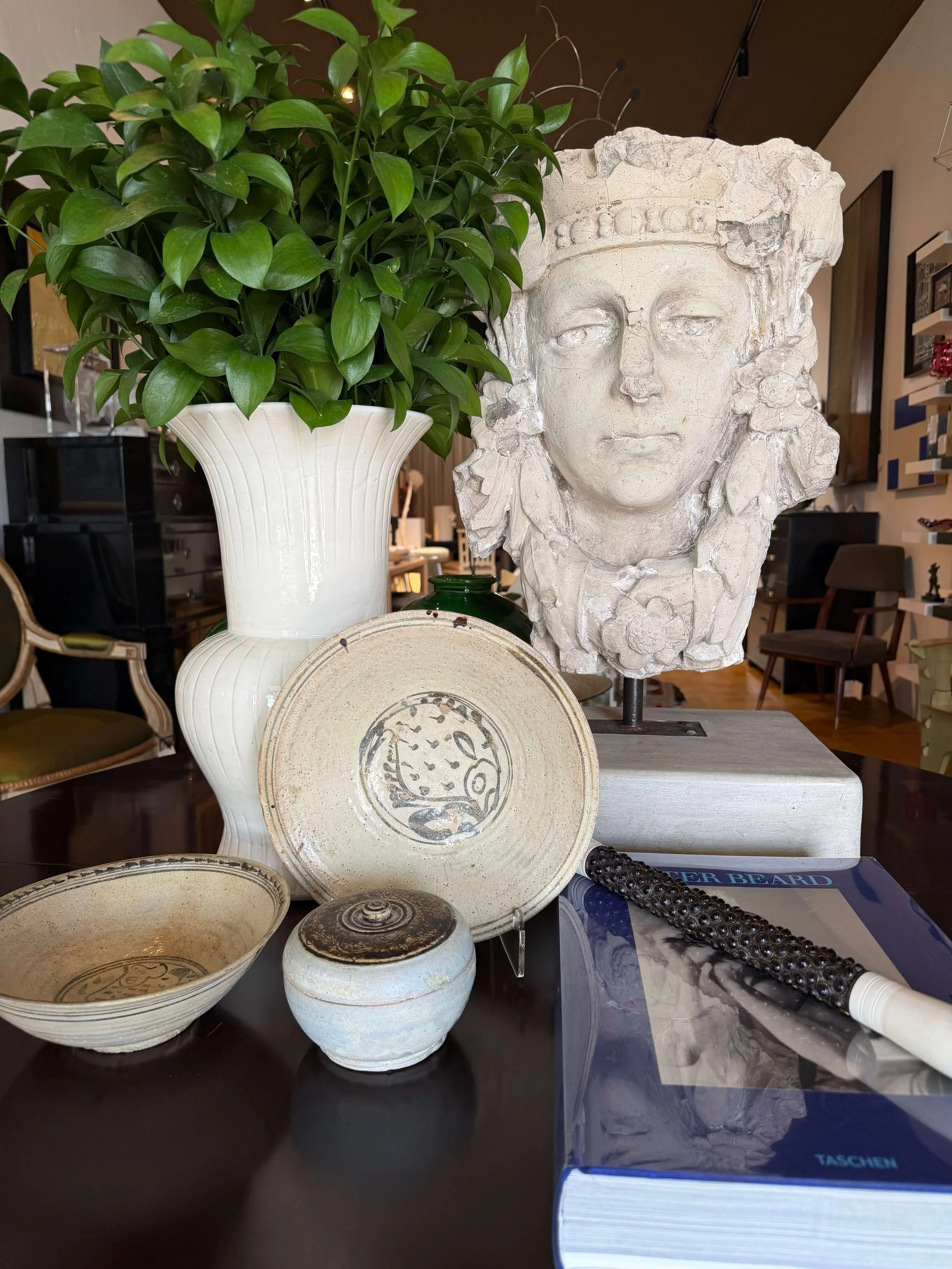
Let's talk about something the furniture-focused conversation around interior design consistently undersells: the objects that aren't furniture are often the most important things in the room.
Think about the spaces you remember. The rooms that stayed with you. The homes that made you feel something. Chances are, what you're actually remembering isn't the sofa. It's the painting. The strange and beautiful object on the shelf. The bronze figure in the corner that seemed to change the entire energy of the space around it.
Original paintings, specifically, do something to a room that nothing else can replicate. An actual painting — made by actual hands, on actual canvas, with all the visible texture and intention and imperfection that involves — brings a quality of aliveness to a wall that no print or reproduction can touch. You can feel the difference even if you can't explain it. The brushwork catches the light differently at different hours. The surface has depth that photographs can't capture. It connects the room to a specific human creative act, and that connection is felt even by people who would never describe themselves as art lovers.
At THE EDIT, original paintings are one of the central parts of the curation — not an add-on. Works are selected for their ability to anchor a room emotionally, to stop you, to start a conversation. Some are bold and abstract, all texture and movement. Others are quieter — figurative, atmospheric, the kind of painting you find yourself looking at differently every time.
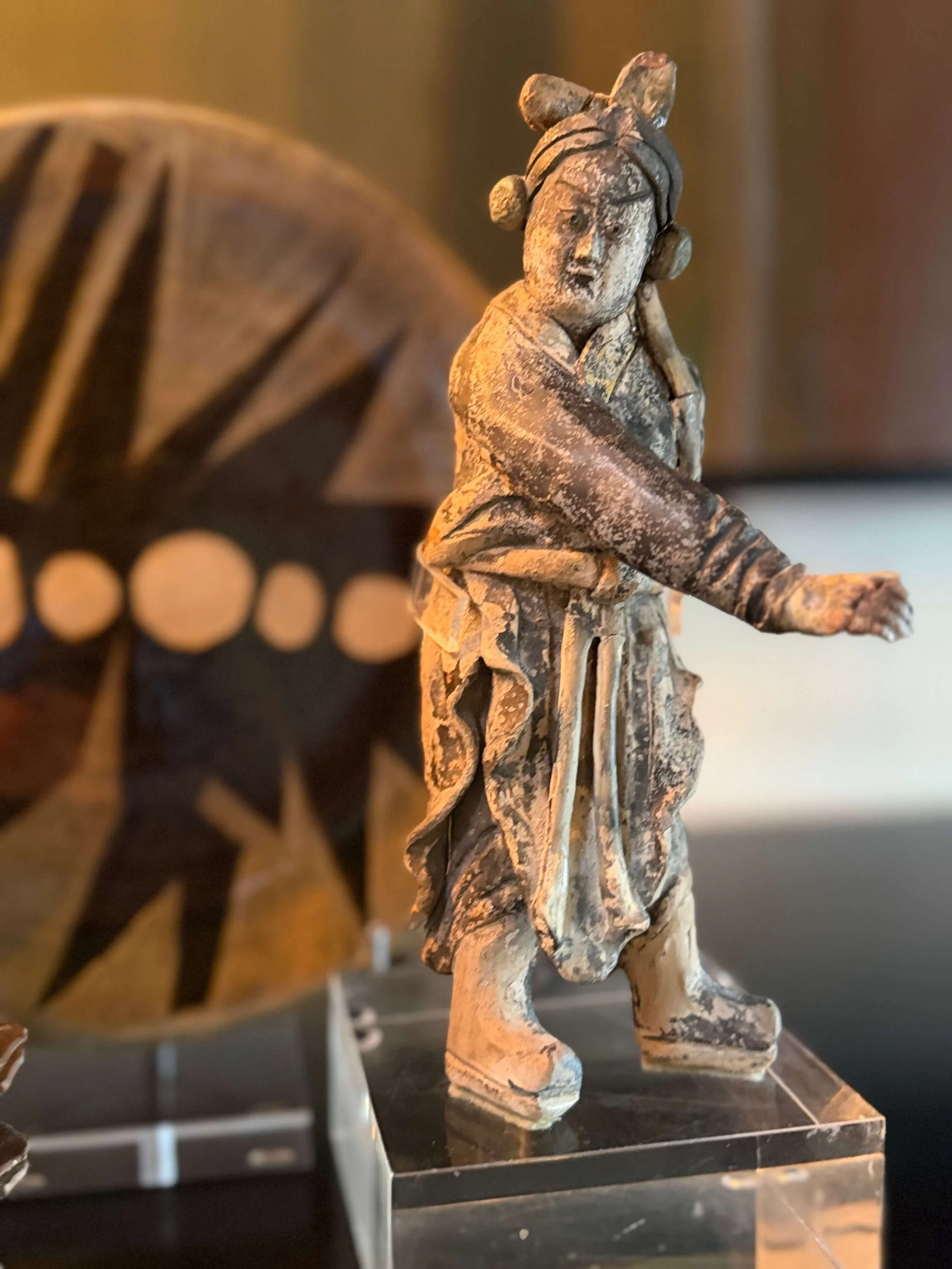
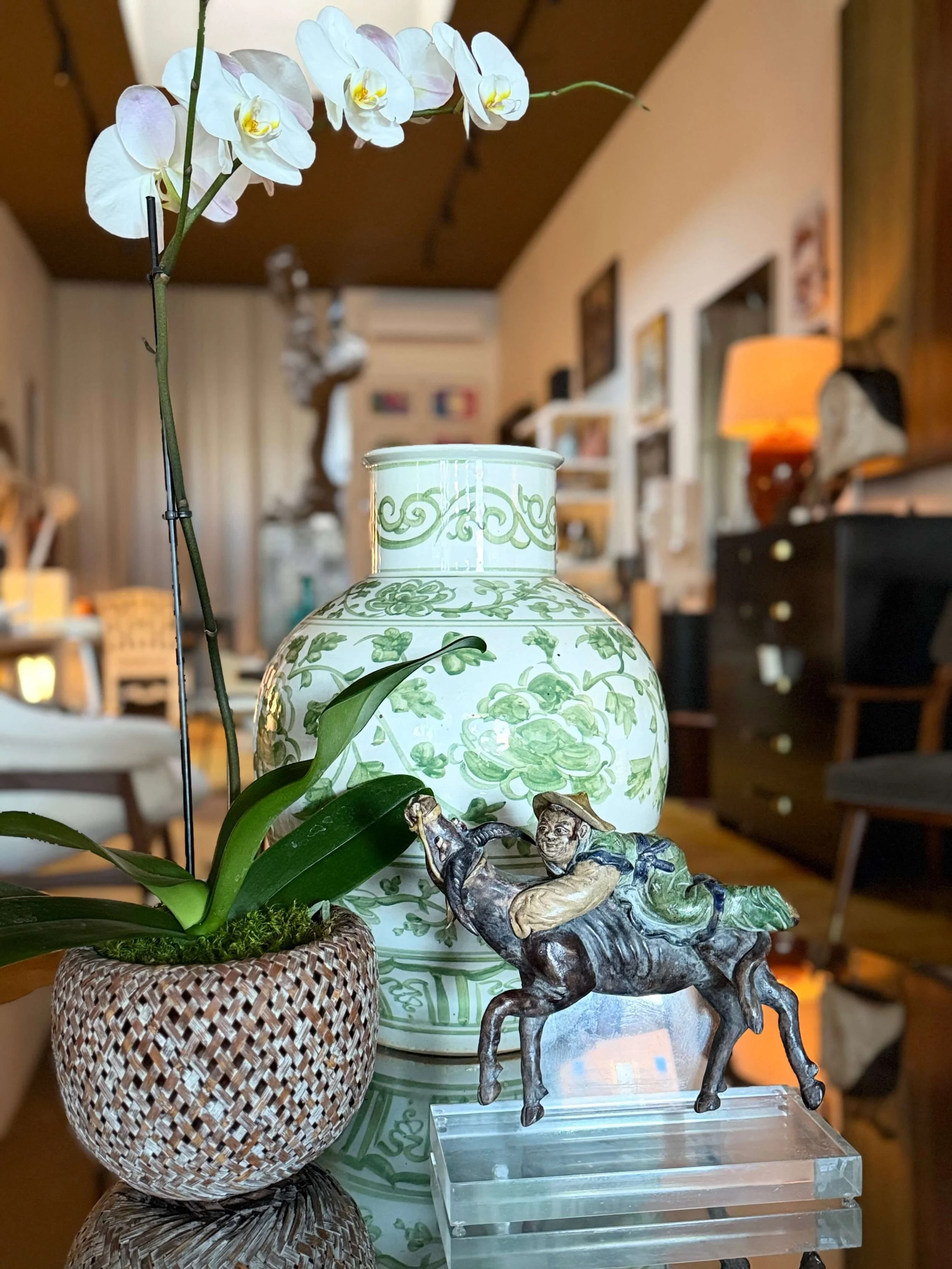
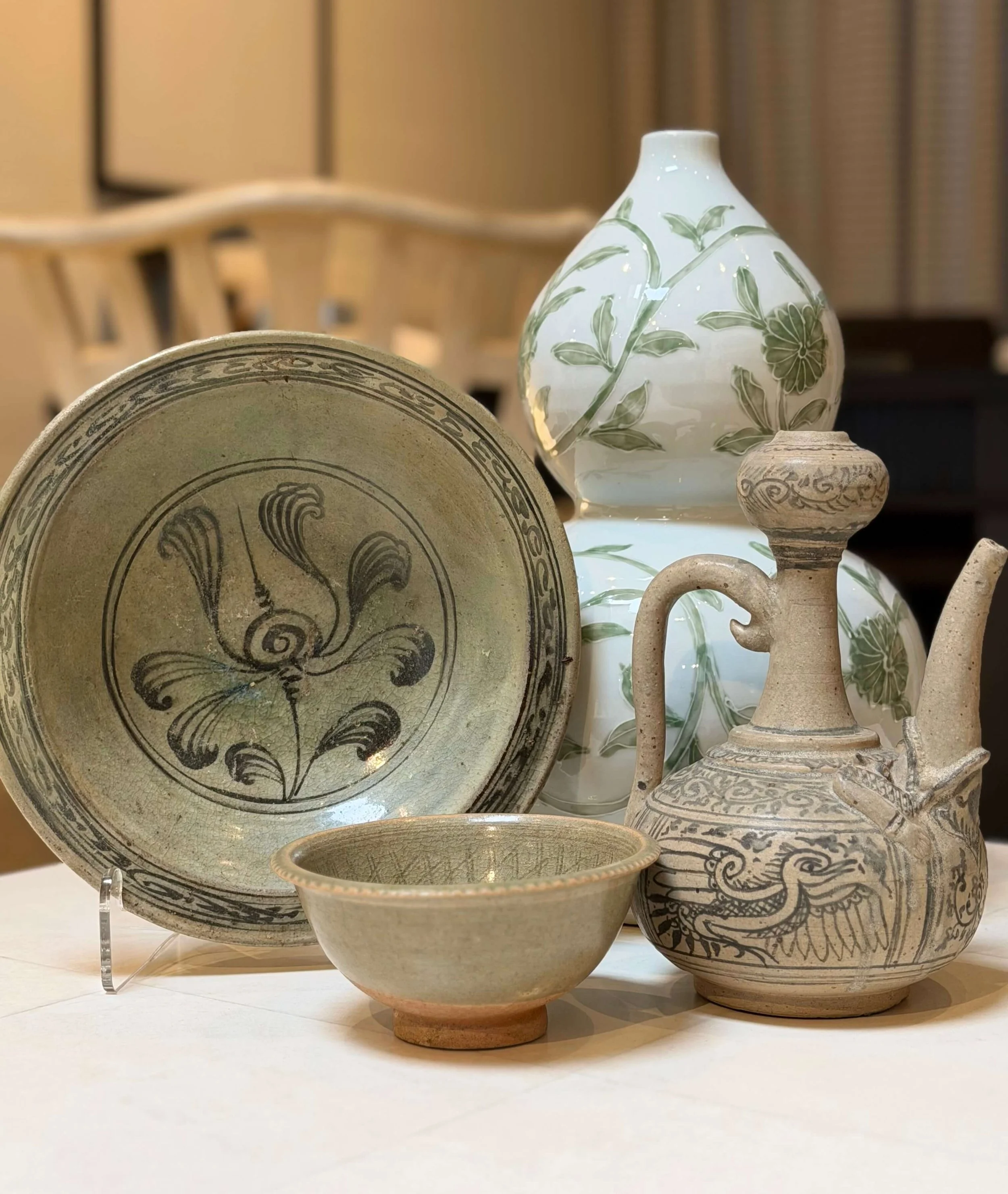
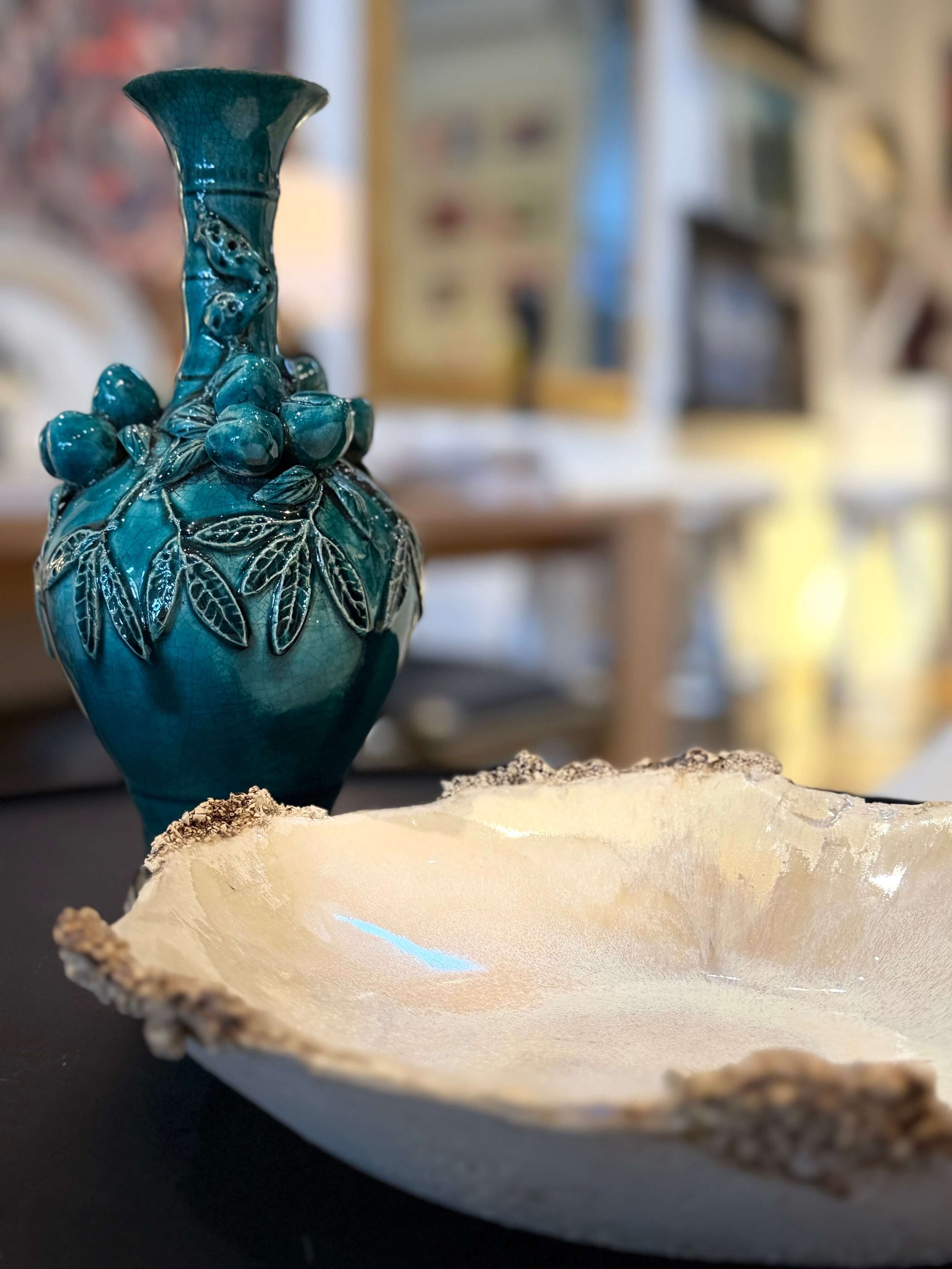
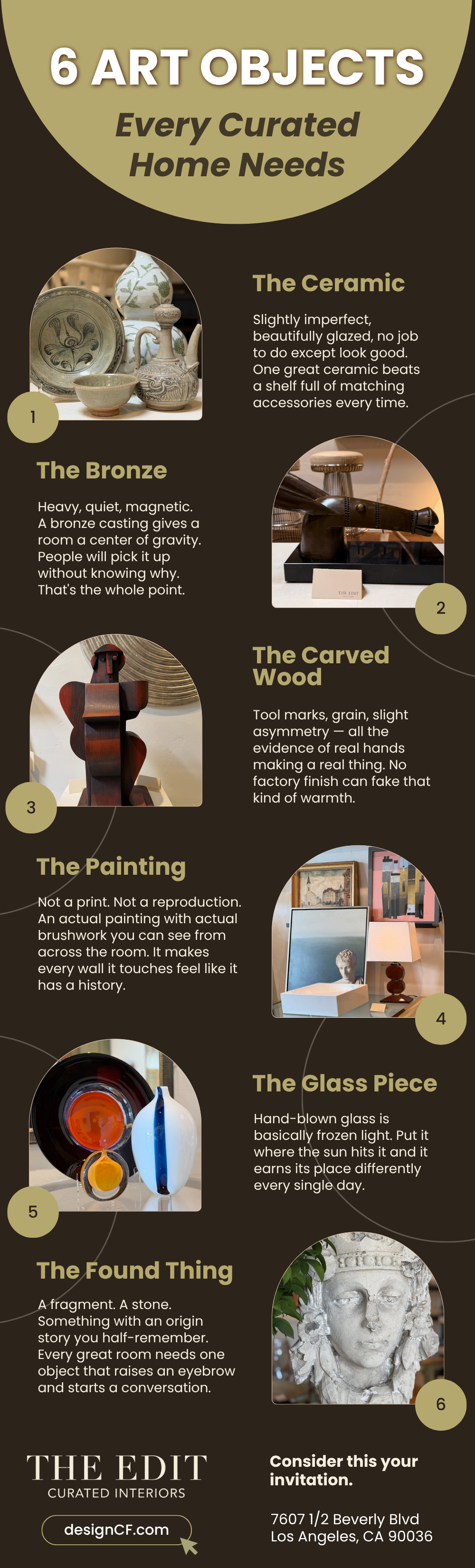
Sculptural art objects work in a similar way, but at a different scale. A hand-cast bronze figure. A glazed ceramic vessel of unusual scale and form. A carved wooden piece that looks like it's from a specific time and place. These are the objects that give a room its punctuation — the moments of surprise, of beauty, of "wait, what is that?" that elevate a space from well-decorated to genuinely extraordinary.
Here's a quick guide to using art objects the way the best designers do:
Choose one anchor object per surface. One extraordinary thing, placed with clear intention, beats six mediocre things arranged carefully every single time.
Pair opposites. A smooth, refined ceramic beside a rough-edged raw wood surface. A delicate bronze figure on a brutalist stone console. The contrast is the point.
Don't be afraid of scale. An oversized sculptural object in a small room creates dramatic tension, not clutter. It communicates confidence.
Let objects be mysterious. You don't need to be able to explain every piece. The best art objects prompt questions more than they answer them.
Curating a Mood: The Importance of Vintage and Artistic Lighting
Genuinely good lighting is the most underestimated element in interior design. Full stop.
You can have extraordinary furniture, original art, beautiful objects — and flat, harsh, poorly considered lighting will flatten all of it instantly. Conversely, the right lamp in the right place can make a modest room feel like somewhere you never want to leave.
The interior design shops Los Angeles that really understand this are the ones where lighting isn't a subcategory — it's a co-equal part of the curation. And at THE EDIT, it absolutely is.
Here's the thing about vintage and artistic lighting that mass-market retailers genuinely cannot offer: the best lamps have already proven themselves. A mid-century floor lamp with an architectural brass frame and a paper shade that diffuses light into the warmest amber glow possible — that lamp was designed by someone who cared deeply about both form and light quality. It has stood the test of time in both ways. It still looks extraordinary and it still performs beautifully.
Contemporary artistic lighting — pieces made by designers who treat the lamp as a sculptural brief — brings something different. A table lamp with a hand-blown glass base in an unusual form. A floor lamp in blackened steel with a deliberate, almost brutalist geometry. These pieces work as art objects first and light sources second, which sounds counterintuitive until you're standing in a room with one and understanding immediately why it's there.
Interior designers working on high-end residential projects in Los Feliz, Silver Lake, Bel Air, and beyond regularly walk through our doors at Beverly Blvd looking for that one piece that makes a room sing. The object that wasn't in the brief, wasn't in the mood board, but the moment they see it, they know it belongs somewhere in their project. A French Art Deco console with beautiful aged patina. An Italian brutalist lamp that somehow looks like a sculpture. A small Flemish oil painting that costs more than it should and is worth every penny.
Stylists and set decorators working in LA's incredibly active film, television, and editorial photography industry are also a huge part of who we serve. THE EDIT Curated Interiors has become a go-to source for unique art objects, sculptural pieces, one-of-a-kind furniture, and beautiful accessories for high-profile shoots. The appeal is obvious — production designers need pieces that read as real and layered on camera. They need objects with genuine texture and history, not props that look like props. Charles Feuilherade's collection delivers exactly that, and our team understands the specific needs of the styling industry: availability questions, set considerations, and the importance of pieces that photograph beautifully from every angle.
If you're an interior designer or stylist working in Los Angeles and you haven't visited us at 7607 1/2 Beverly Blvd, add it to the list. It's genuinely one of the most useful sourcing stops in the city.
Big-Box Luxury vs. Curated Boutiques
When it comes to luxury home furnishings, expensive and rare are not the same thing — and the difference becomes clear when comparing big-box luxury retailers to curated boutiques like THE EDIT.
Mass-market luxury operates at scale, meaning that lamp you're considering is likely sitting in three hundred hotel lobbies; its range skews heavily toward furniture, with lighting and accessories treated as afterthoughts, and its materials are standardized for cost efficiency. Pieces are designed with 5–10 year trend cycles in mind, resulting in rooms that feel competent and inoffensive but rarely memorable.
A curated boutique takes the opposite approach entirely. Every piece is hand-selected across art, lighting, and objects — many one-of-a-kind or vintage — and made from materials like unlacquered brass, hand-blown glass, hand-thrown ceramic, and heirloom canvas.
Rather than generic prints and catalog lighting, you'll find original paintings sourced for emotional resonance and lighting treated as sculpture. The result is not just a furnished room but a fully composed environment: specific, arresting, and deeply personal — built to outlast every trend that follows and, occasionally, to shift your perspective entirely.
The question isn't really about budget. It's about what you want your space to communicate. A room built from big-box luxury says "I have money." A room built through the best interior design shops Los Angeles has — places like THE EDIT — says "I have a point of view." Those are genuinely different statements, and people feel the difference the moment they walk in.
The Bottom Line: A Room Is a Composition
Here's the thing nobody tells you when you start thinking seriously about interior design: the furniture is the least interesting part.
It's the foundation, sure. You need it. But the pieces that actually make a room — that give it character, soul, and that quality of stopping people in their tracks — are almost always the other things. The painting you didn't plan to buy but couldn't leave without. The vintage lamp that changes the entire mood of the space at dusk. The ceramic object you've had for years that still makes you happy every time you walk past it.
The best interior design shops Los Angeles has produced understand this completely. They're not selling you a room — they're selling you the building blocks of a personal creative vision. Art, lighting, objects, décor, and furniture, all curated together, all chosen to work in composition rather than in isolation.
THE EDIT at 7607 1/2 Beverly Blvd is where that vision comes together. It's where designers go when they need the piece that makes a project sing. Where homeowners discover that the lamp they came in to look at is actually the least interesting thing in the room. Where the answer to "where do interior designers shop in Los Angeles" stops being theoretical and becomes something you can walk around in, touch, and take home.
Come see what genuinely curated looks like.
Frequently Asked Questions
-
Interior designers in Los Angeles typically shop at independent, highly curated boutiques located in the West Hollywood Design District and along Beverly Blvd, specifically favoring hidden gems like THE EDIT Curated Interiors for one-of-a-kind art, lighting, and sculptural pieces.
-
Beverly Boulevard is widely considered one of the best streets for high-end interior design shopping in Los Angeles, housing an elite mix of curated boutiques, antique dealers, and fine art curators.
-
A curated interior design shop treats every item — from original paintings to lighting and décor objects — as a piece of art meticulously hand-selected by a designer, whereas a regular furniture store sells mass-produced, matching sets.
-
The top interior design trends for 2026 emphasize soulful, collected spaces characterized by original art, rich tactile textures, organic décor objects, and vintage sculptural lighting.
-
You can add soul to a modern home by incorporating one-of-a-kind art objects, original paintings, vintage décor, and layered ambient lighting rather than relying on new, mass-produced items.
-
While some Los Angeles showrooms strictly serve the trade, premier curated boutiques like THE EDIT Curated Interiors are open to both industry professionals and the public who are searching for unique paintings, lighting, and décor.
-
Lighting is critical in interior design because it dictates the emotional mood of a space; expertly curated sculptural lamps and sconces can highlight original paintings and transform the ambiance of a room entirely.
-
You can purchase unique, globally sourced art, paintings, lighting, and décor objects at specialized interior curation shops like THE EDIT, located at 7607 1/2 Beverly Blvd in Los Angeles.