
THE EDIT Curated Interiors: Meet LA's Go-To Interior Design Curator
Let's be real for a second. Anyone can walk into a big-box furniture store, grab a beige sofa, a matching coffee table, and call it a day. But is that a room with a soul? Absolutely not. That's a room that looks like every other room on the block. If you're reading this, you already know the difference. You're looking for something better — something that makes people stop in the doorway, take a breath, and ask, "okay, where did you get that?"
That's exactly where an interior design curator comes in. And in Los Angeles, nobody does this quite like Charles Feuilherade at THE EDIT Curated Interiors, tucked right into Beverly Blvd at 7607 1/2 Beverly Blvd, Los Angeles, CA 90036.
The Mind of an Interior Design Curator: Moving Beyond Basic Decor
Here's something that might change how you think about your home forever. Buying furniture and curating a collection are two completely different things. Like, not even in the same zip code.
Buying furniture is transactional. You need a chair, you find a chair, done. Curating a collection? That's a practice. It's a philosophy. An interior design curator doesn't just ask "does this look good?" — they ask, "does this have a story? Does it belong here? What does it say about the person who lives in this space?"
The best interior design curators are part archaeologist, part art historian, part traveling merchant, and part storyteller. They know that a hand-carved Indonesian side table sitting next to a 1950s French pendant lamp isn't a design mistake — it's a conversation. It's two objects from completely different worlds finding a reason to coexist, and somehow making the whole room feel richer for it.
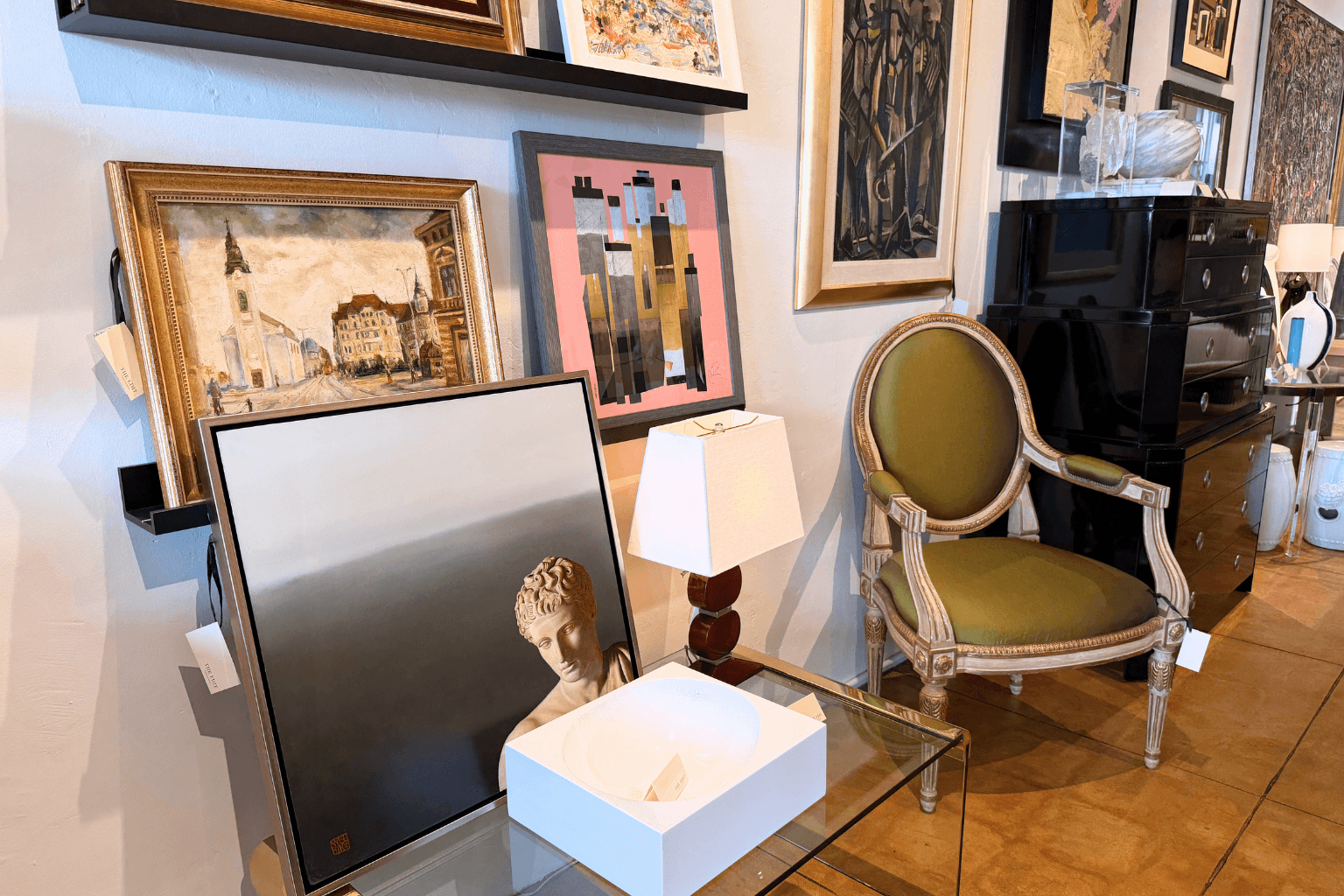
Charles Feuilherade, the talented designer behind THE EDIT Curated Interiors, built his entire practice around this idea. He sees objects not as products to fill a space, but as characters in a room's ongoing story. Every lamp, every sculpture, every strange little ceramic thing on the shelf was chosen intentionally — not because it was on sale, not because it matched the curtains, but because it earned its place.
An interior design curator operates with what the industry calls "the edited eye" — the ability to look at thousands of objects and know immediately which handful of them are actually worth something. Not just financially, but emotionally, aesthetically, historically. That's a skill that takes years to develop, and it's exactly what you're getting when you walk through the doors at THE EDIT Curated Interiors.
Top 2026 Trends in Interior Design Curation
If you want to know what the most design-forward homes in Los Angeles look like right now, it's not the cold, Instagram-perfect minimalism of a few years ago. The aesthetic pendulum has swung, and the results are way more interesting. Here's what's actually happening in 2026:
The "Slow Furniture" Movement
This is probably the biggest shift in how serious collectors and designers are approaching their spaces. Think of it as the antidote to fast furniture — that disposable, flat-pack stuff that's stylish for about eighteen months and then falls apart. A growing number of high-net-worth buyers are actively rejecting that model. According to recent luxury market reports, demand for provenance-backed antique furniture has grown by over 30% among buyers in major U.S. design markets since 2023. People want to know where a piece came from. They want the story, the auction history, the paperwork. They want furniture that their kids might one day argue over in a will.
Hyper-Personalization
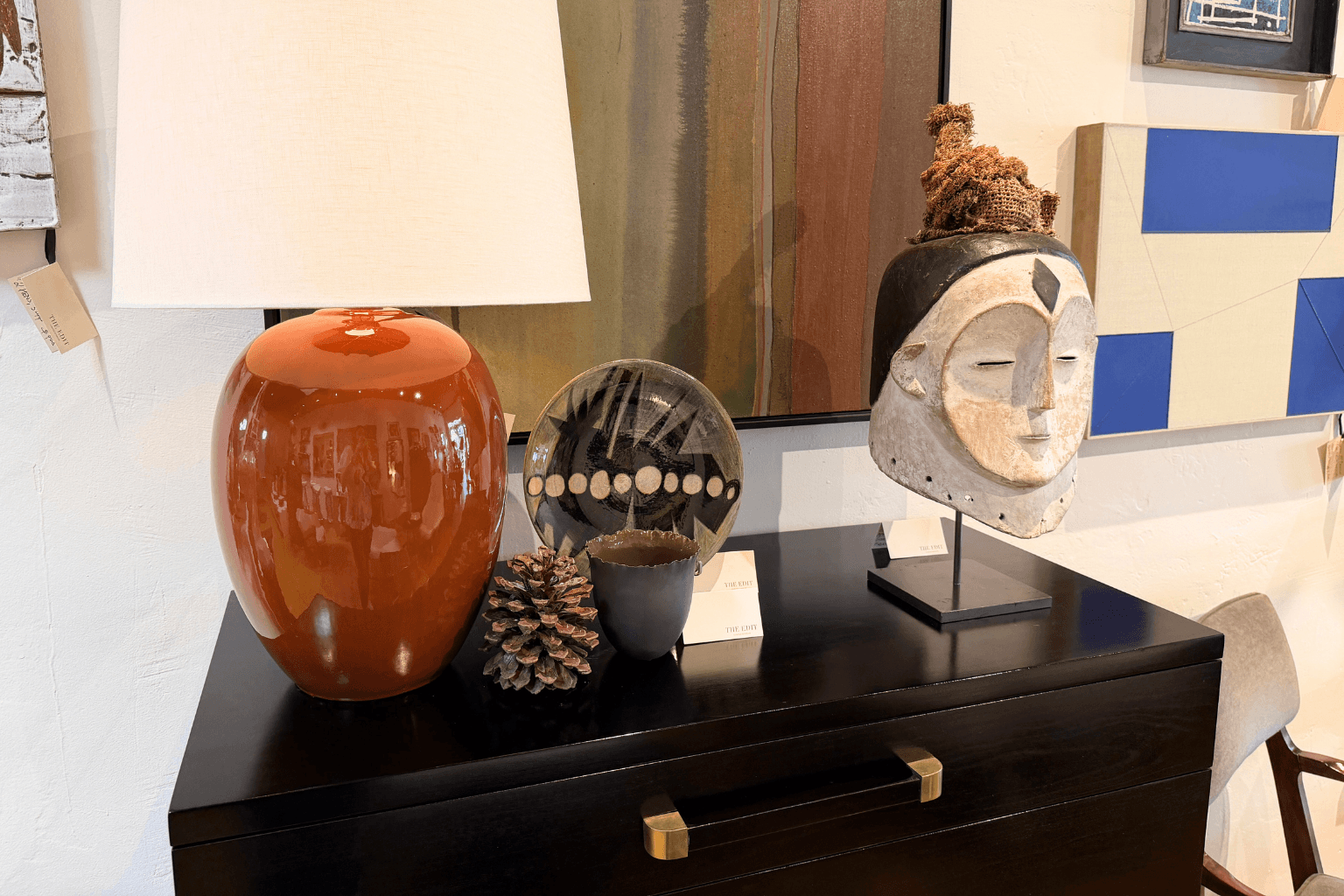
Homes that look like they could belong to anyone are out. Homes that could only ever belong to you are very, very in. This is exactly why the role of an interior design curator has become so sought-after — because a true curator doesn't just help you decorate a space, they help you build a visual identity. Your travels, your obsessions, your taste, your history. All of it showing up in the objects around you.
The "Collected" Look
That deliberate-yet-effortless feeling that your home has been assembled over a lifetime of wandering through markets in Marrakech, picking up things in Parisian auction houses, spotting something wild at an estate sale in the Valley. The trick is that it doesn't happen by accident. It happens because an interior design curator with a very good eye made it look that way.
Biophilic and Tactile Materials
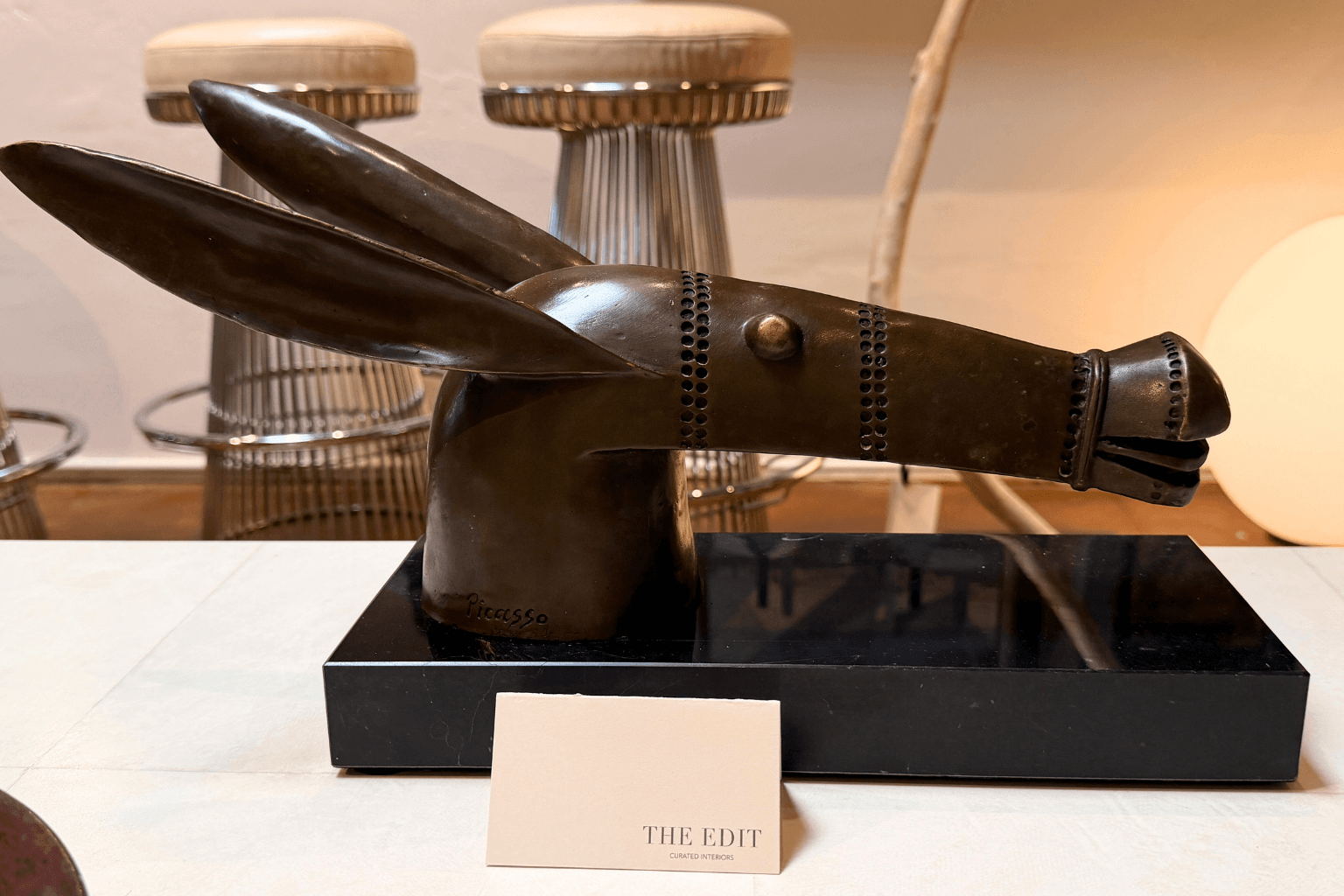
Travertine, unlacquered brass, burl wood, raw linen — surfaces that invite touch and reward a second look. Highly textured sculptures. Organic forms. Things that feel alive even when they're standing still. THE EDIT Curated Interiors leans hard into this, showcasing pieces that blur the line between furniture and sculpture, between decor and fine art.
The Art of Global Sourcing: From European Auctions to Beverly Blvd
So where does all this amazing stuff actually come from? Spoiler: not from a warehouse catalog.
Charles Feuilherade has spent years building a sourcing practice that takes him across continents — antique fairs in France, auctions in Belgium and Italy, exclusive private sales in the Netherlands, estate clearances in the English countryside, specialist markets in Southeast Asia. The Edit's collection is painstakingly assembled from all of these channels, one piece at a time, with each object earning its place in the inventory through a rigorous (and frankly obsessive) selection process.
This is what separates a genuine interior design curator from someone who just has good taste and a IKEA account. The sourcing network matters enormously. Being known in the right circles, getting access to the right sales before they go public, having the relationships with the right dealers in Lyon or Ghent or Copenhagen — that takes years. That's the real value proposition, and it's something you simply cannot replicate by spending an afternoon on 1stDibs.
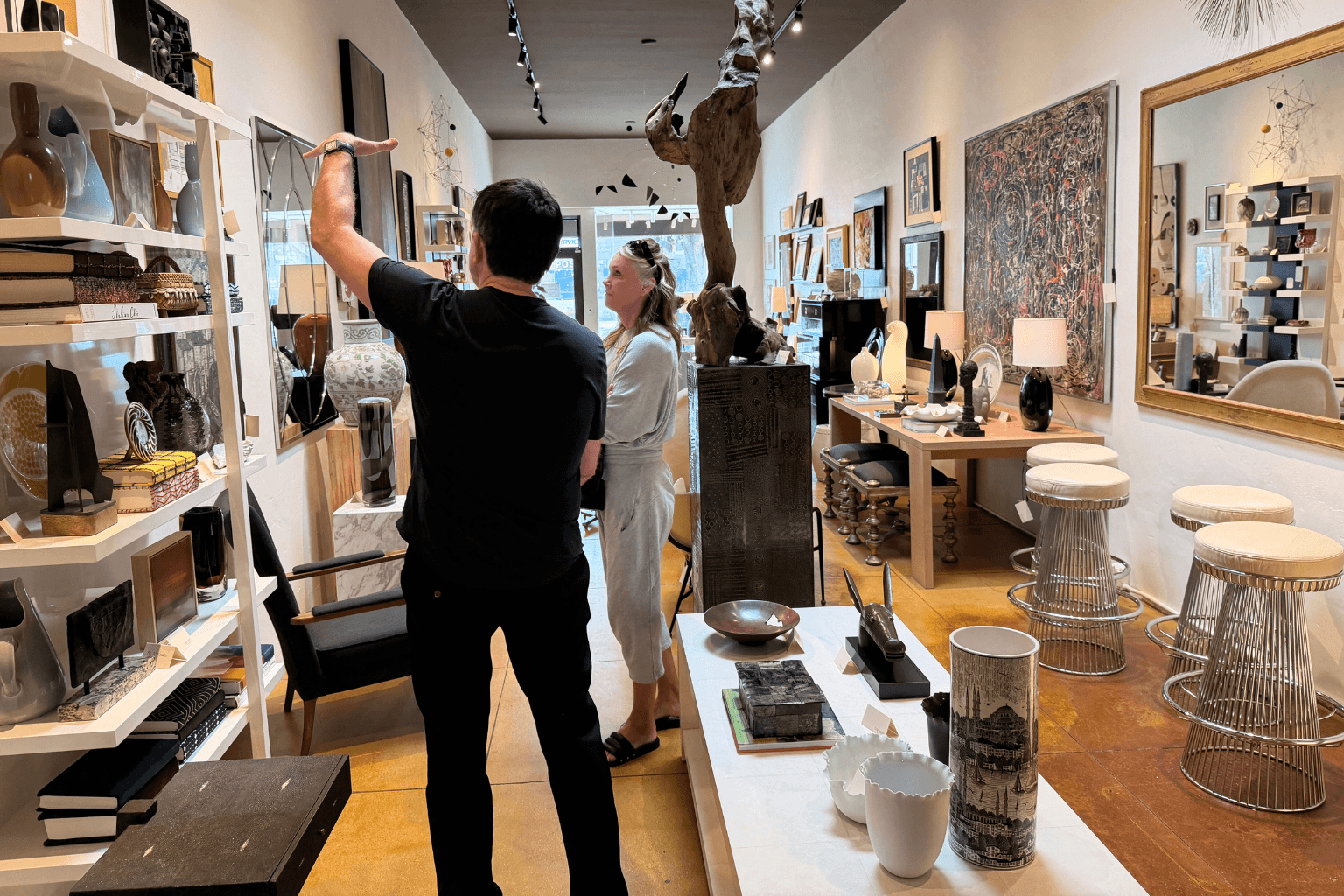
When a piece arrives at the Beverly Blvd showroom, it's already been through a kind of gauntlet. Does it have genuine character? Is the craftsmanship honest? Does it have a history worth knowing about? Is there a reason to love it beyond the fact that it's old? Only the objects that clear every single one of those hurdles make it through the doors at 7607 1/2 Beverly Blvd.
The result is a showroom that feels less like a store and more like a very well-traveled friend's apartment — if that friend happened to have exceptional taste, a suitcase full of flight stamps, and a story for every single thing they own.
A Trusted Sourcing Destination for Interior Designers and Stylists
Here's something a lot of people outside the industry don't know: some of Los Angeles's most beautiful, most photographed, most talked-about interiors are furnished with pieces sourced from shops like THE EDIT Curated Interiors. Not from big commercial showrooms. Not from mass-market retailers. From carefully maintained, relationship-driven curation destinations run by people who actually care about the objects they sell.
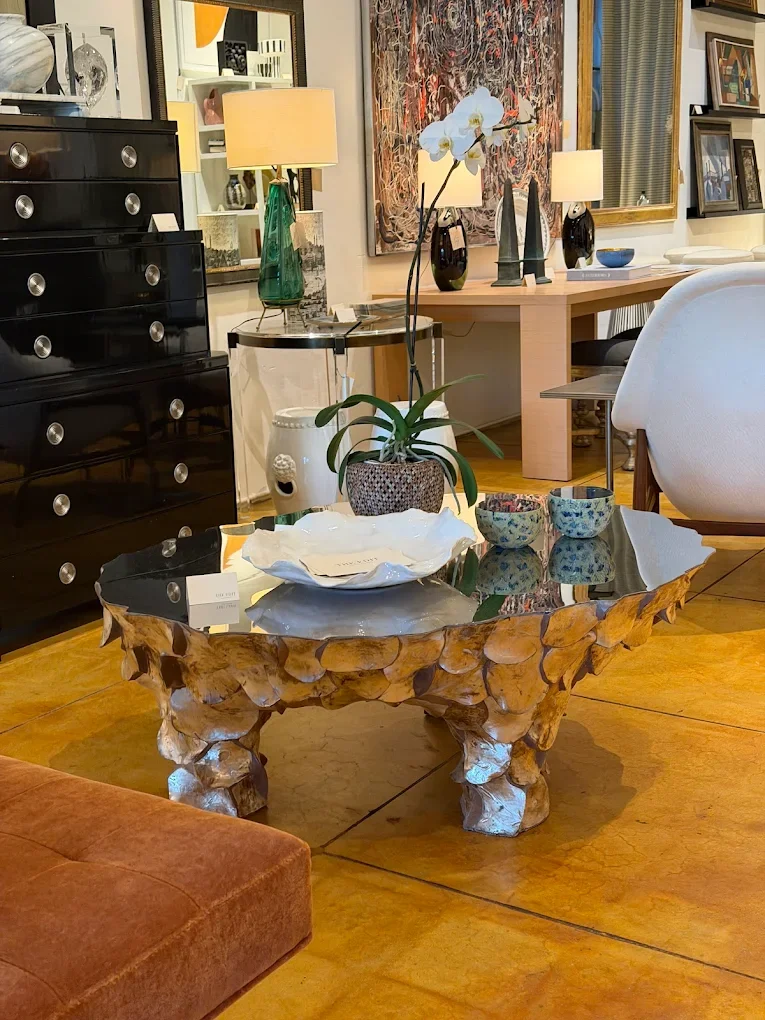
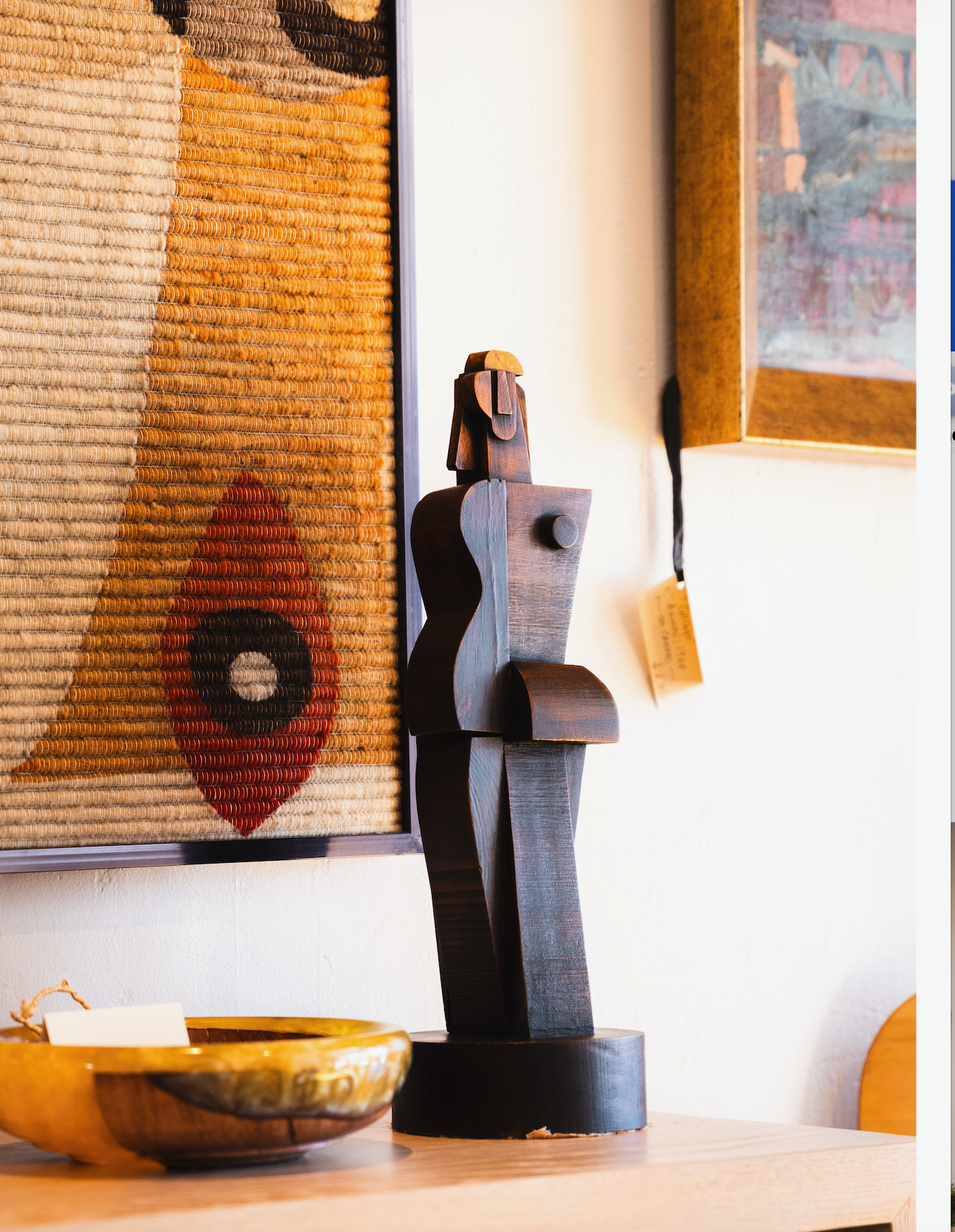
Interior designers working on high-end residential projects in Los Feliz, Silver Lake, Bel Air, and beyond regularly walk through our doors at Beverly Blvd looking for that one piece that makes a room sing. The object that wasn't in the brief, wasn't in the mood board, but the moment they see it, they know it belongs somewhere in their project. A French Art Deco console with beautiful aged patina. An Italian brutalist lamp that somehow looks like a sculpture. A small Flemish oil painting that costs more than it should and is worth every penny.
Stylists and set decorators working in LA's incredibly active film, television, and editorial photography industry are also a huge part of who we serve. THE EDIT Curated Interiors has become a go-to source for unique art objects, sculptural pieces, one-of-a-kind furniture, and beautiful accessories for high-profile shoots. The appeal is obvious — production designers need pieces that read as real and layered on camera. They need objects with genuine texture and history, not props that look like props. Charles Feuilherade's collection delivers exactly that, and our team understands the specific needs of the styling industry: availability questions, set considerations, and the importance of pieces that photograph beautifully from every angle.
If you're an interior designer or stylist working in Los Angeles and you haven't visited us at 7607 1/2 Beverly Blvd, add it to the list. It's genuinely one of the most useful sourcing stops in the city.
The 5 Essential Elements of a Perfectly Curated Space
Ask any serious interior design curator what the non-negotiables are and you'll get different answers from different people. But these five elements come up again and again in the best spaces — and they're exactly what we think about when assembling our collection at THE EDIT Curated Interiors.
1. Scale. It's everything and it's constantly underestimated. A gorgeous object in the wrong scale is a visual disaster. An interior design curator has an almost instinctive feel for how a piece will live in a room — whether a sculpture will feel commanding or lost, whether a painting will anchor a wall or shrink against it. Getting scale right is what separates a room that feels considered from one that just feels busy.
2. Texture. This is what gives a room its physical presence. You should be able to walk through a beautifully curated space and practically feel it even if you're not touching anything. Rough stone next to smooth lacquer. Raw linen against aged brass. Matte ceramic beside polished wood. An interior design curator thinks in textures the way a chef thinks in flavors — layering and contrasting them until the whole thing comes together in a way that's deeply satisfying.
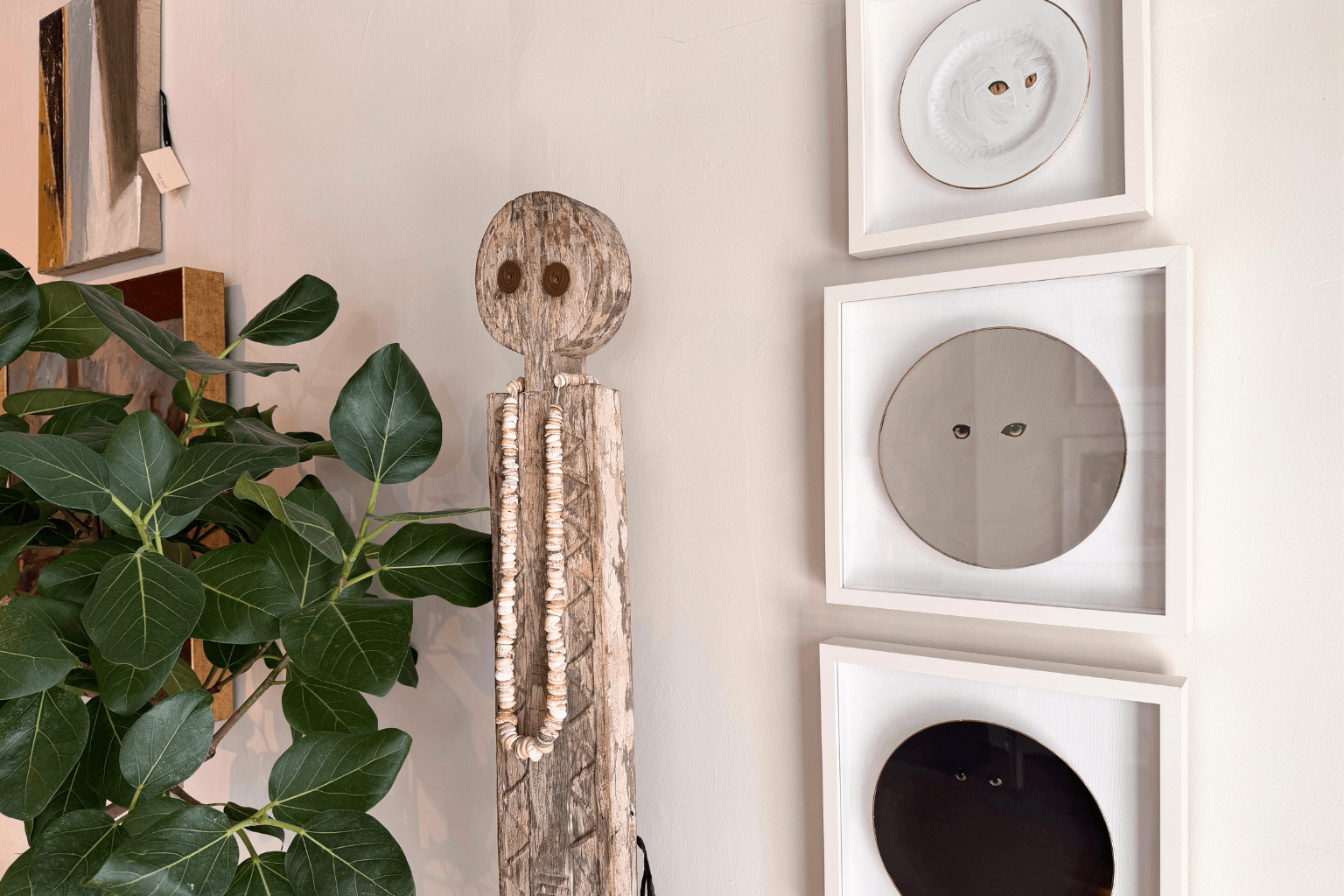
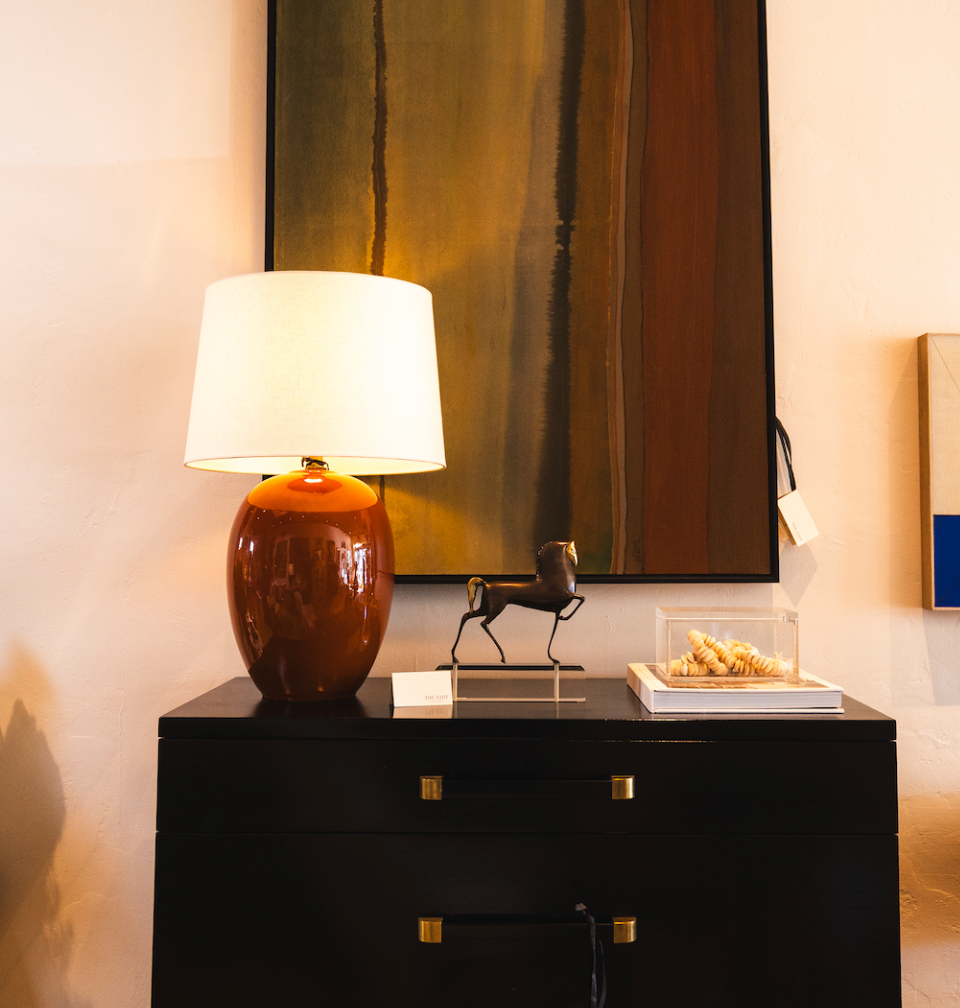
3. Provenance. This is the element that elevates a collection beyond decor and into something closer to a personal archive. Knowing that a chair was made in a specific Milanese workshop in 1962, or that a painting spent thirty years in a private collection in Antwerp before landing in your living room — that knowledge changes how you experience the object. It gives it gravity. Provenance is what makes slow furniture worth the investment.
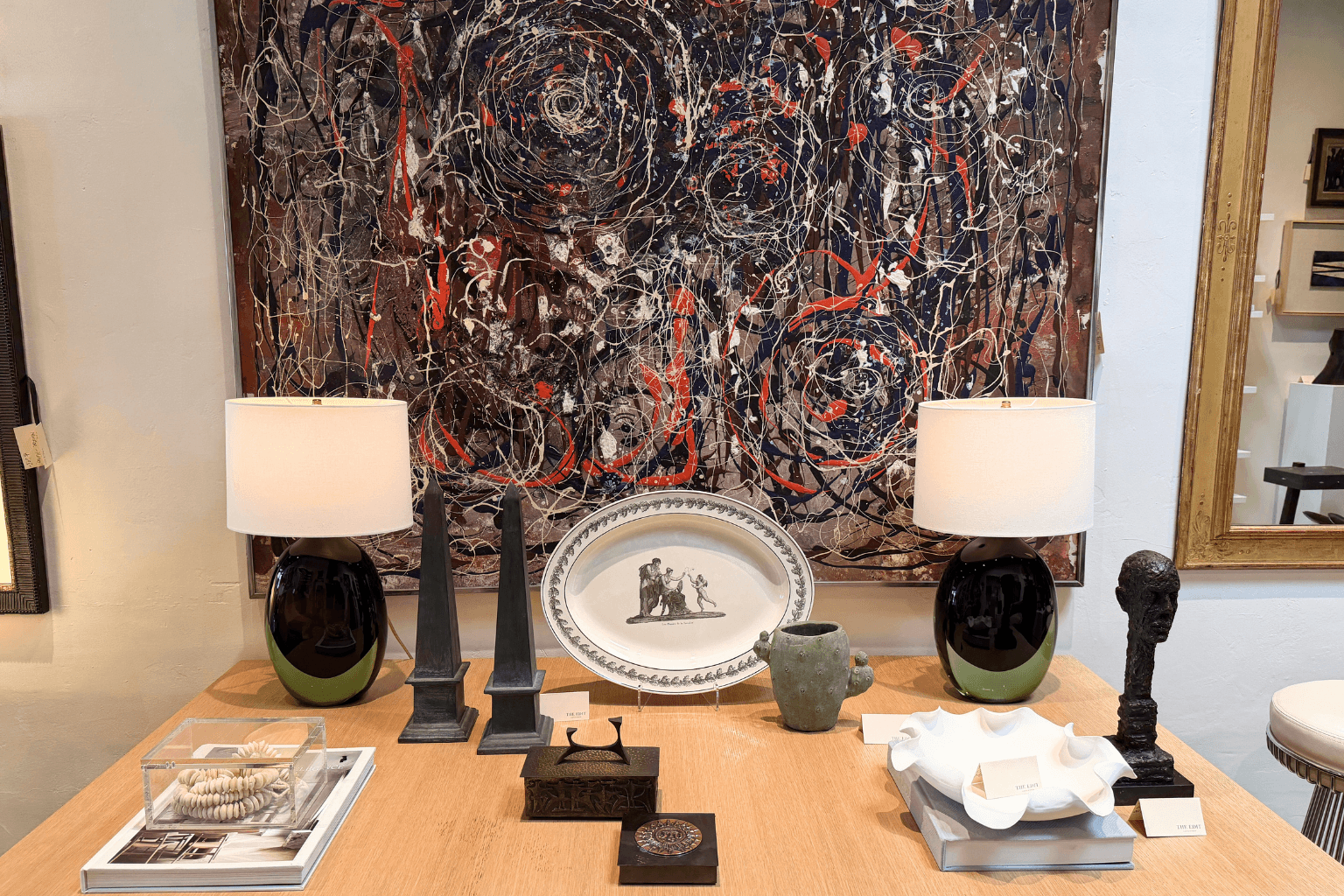
4. Juxtaposition. Arguably the most fun element to play with, and where true interior design curators get to show their personality. The unexpected combinations — an 18th-century gilded mirror above a brutalist concrete shelf, a Japanese tansu chest in a room full of mid-century Danish furniture — these are the moments that make a space feel genuinely alive and original. They're the reason visitors remember a room long after they've left it.
5. Lighting. The element that can make or break everything else. The best-curated collection in the world will look flat under the wrong light. An interior design curator thinks about how every piece will be illuminated — the warm glow of a well-placed lamp, the directional drama of a ceiling spot, the natural light shifting through a window during the day. Lighting isn't an afterthought in a curated space. It's the final edit.
Curated Antiques vs. Mass-Produced Furniture
Alright, let's settle this once and for all with a real comparison, because we hear the argument a lot: "But isn't antique furniture expensive? Isn't mass-market stuff just more practical?"
Here's the honest breakdown:
Value: Curated antique and vintage furniture holds its value over time and often appreciates, particularly for well-documented pieces from recognized design periods. Mass-produced furniture depreciates immediately — often by 50-80% the moment it leaves the shop floor. You're not buying furniture when you buy mass-produced. You're renting it with a longer commitment.
Lifespan: A well-made antique piece — something built in France in the 1890s or Italy in the 1960s — was constructed with techniques and materials that were meant to last generations. And it has already proven it can, because it's still here. Mass-produced modern furniture is typically engineered to a price point, not a lifespan. The joinery is faster, the materials are cheaper, and the expectation is that you'll replace it within a decade.
Materials: Antique and vintage pieces were almost universally made from solid hardwoods, hand-applied finishes, genuine metals, and natural textiles. Mass-produced furniture increasingly relies on MDF, particleboard, veneer, and synthetic upholstery that ages poorly and looks worse every year.
Story: This is the category where mass-produced furniture doesn't even show up to compete. A vintage Italian sideboard from a private estate in Turin has a story. A particleboard cabinet assembled in a factory and shipped in a flat box does not. An interior design curator's entire value proposition is built on the story — and the story is exactly what transforms a house into a home.
| Category | Curated Antique & Vintage | Mass-Produced Furniture |
|---|---|---|
| Value Over Time | Holds or appreciates in value, especially for documented pieces from recognized design periods | Depreciates immediately — often 50–80% the moment it leaves the shop floor |
| Lifespan | Built to last generations — and already has, because it's still here | Engineered to a price point, not a lifespan. Expect to replace it within a decade |
| Materials | Solid hardwoods, hand-applied finishes, genuine metals, natural textiles | MDF, particleboard, veneer, synthetic upholstery that ages poorly and looks worse every year |
| Story | Provenance, history, character — a piece that means something and starts conversations | Assembled in a factory, shipped in a flat box, forgotten within a year |
| Investment Logic | You're buying an asset | You're renting furniture with a longer commitment |
The bottom line? Working with an interior design curator isn't a luxury — it's an investment in living better. The objects around you shape how you feel every single day. They shape how your home feels to the people who visit. They tell a story about who you are and what you care about, whether you intend them to or not. Why not let that story be a good one?
If you're in Los Angeles and you're ready to start building something real, come find us. We're at 7607 1/2 Beverly Blvd, and we've got a lot to show you.
Frequently Asked Questions
-
An interior design curator selects, acquires, and arranges rare, unique, or historically significant furniture and art pieces to create a cohesive, highly personalized aesthetic narrative for a space.
-
An interior designer focuses on the functional layout, flow, and holistic design of a room, whereas a curator specializes in sourcing specific, rare, or one-of-a-kind objects and fine art to elevate the designer's foundational vision.
-
High-end interior designers source furniture from specialized curation shops, global antique fairs, private auctions, estate sales, and exclusive artisan workshops to avoid mass-produced retail items.
-
Yes, curated vintage and antique furniture holds or increases its value over time, unlike mass-produced modern furniture which immediately depreciates upon purchase.
-
To mix modern and antique furniture successfully, designers use an 80/20 rule, unifying disparate eras by maintaining a consistent color palette, matching visual weights, and using modern lighting to highlight antique textures.
-
Yes, professional stylists, set decorators, and interior designers frequently source unique art objects, sculptures, and furniture from THE EDIT in Los Angeles for high-profile photoshoots and staging.
-
In 2026, the most sought-after antique styles include French Art Deco, Mid-Century Italian modernism, and brutalist sculptural pieces, valued for their organic textures and architectural lines.
-
THE EDIT Curated Interiors is located in the heart of the Los Angeles design district at 7607 1/2 Beverly Blvd, Los Angeles, CA 90036.